

The modern workforce is no longer bound by location, time zone, or corporate networks. Data engineers, analysts, and business users now access critical systems from home offices, shared workspaces, and across global regions. As a result, expectations around availability have fundamentally changed.
For data platforms, “business hours” no longer exist. Users expect systems to be available, responsive, and consistent at all times. Meeting these expectations requires more than adding redundancy — it demands a rethinking of how data platforms are designed, operated, and governed in a distributed world.
This article explores practical lessons from building always-available data platforms that support a globally distributed workforce without sacrificing reliability or control.
Availability Is a Platform Responsibility
In many organizations, availability is still treated as an infrastructure concern. In reality, availability is an emergent property of the entire data platform, spanning ingestion, storage, processing, and consumption layers.
Common failure points include:
- Centralized dependencies that create single points of failure
- Batch pipelines that block downstream users when delayed
- Tight coupling between systems that amplifies small outages
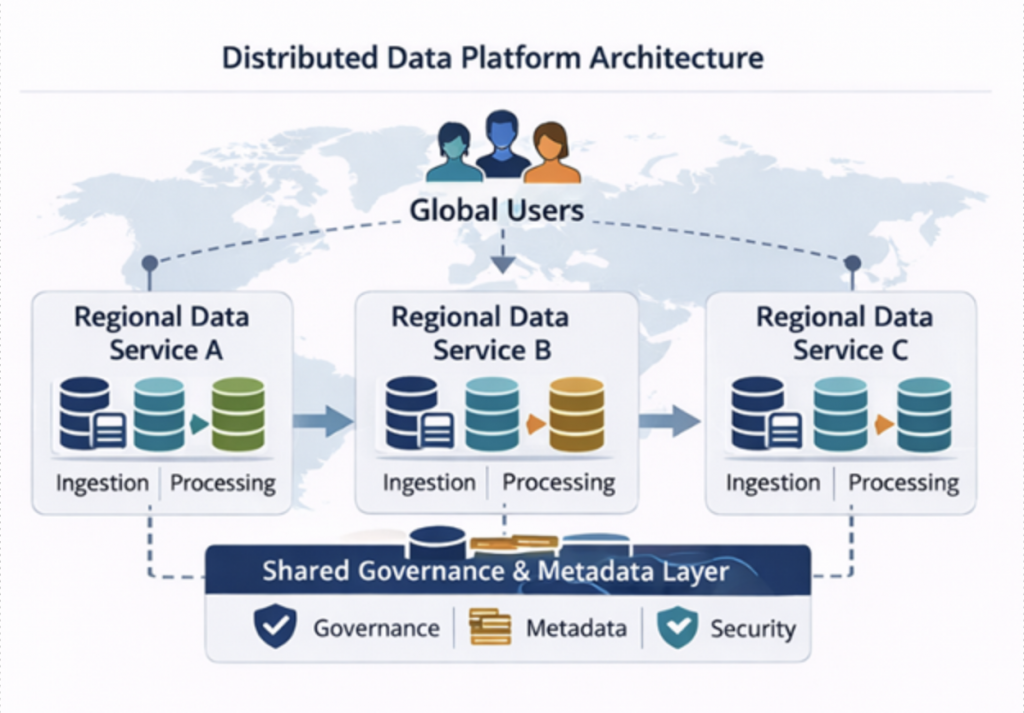
Always-available platforms prioritize decoupling. By separating ingestion from processing and processing from consumption, teams reduce blast radius and improve resilience under unpredictable conditions.
Designing for Global Access, Not Centralized Control
Distributed workforces introduce latency, network variability, and regional constraints that centralized architectures struggle to handle.
Mature platforms increasingly adopt:
- Region-aware deployments, placing data services closer to users
- Replication strategies aligned with access patterns rather than infrastructure convenience
- Asynchronous processing models that tolerate temporary disruptions
The goal is not to eliminate complexity, but to contain it — ensuring users experience consistent behavior even when underlying systems are under strain.
Observability as an Availability Enabler
When platforms operate continuously, failures are inevitable. What differentiates resilient systems is how quickly teams can detect and respond.
Always-available data platforms invest in:
- Pipeline-level visibility, not just system health metrics
- Consumer-centric monitoring, tracking freshness and usability of data
- Clear service-level expectations, communicated to downstream teams
By shifting focus from “uptime” to data availability, organizations align technical metrics with real user needs.
Data Consistency vs. Data Accessibility
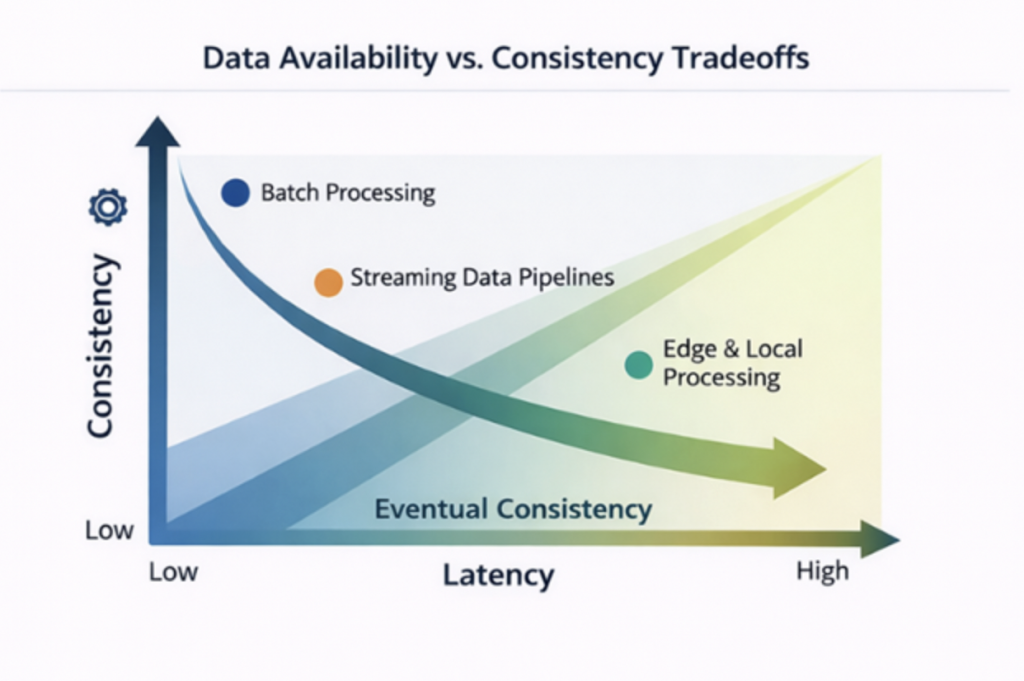
A common challenge in distributed platforms is balancing strict consistency with timely access. For globally distributed teams, waiting for perfectly synchronized data can be more damaging than working with clearly labeled, near-real-time data.
Practical approaches include:
- Publishing data freshness indicators
- Supporting eventual consistency where appropriate
- Allowing consumers to choose between latency and accuracy tradeoffs
Transparency is critical. Users are more accepting of tradeoffs when they understand them.
Governance That Scales with Availability
Governance challenges grow as availability increases. More users, regions, and use cases mean more opportunities for misalignment.
Effective governance in always-on platforms focuses on:
- Clear data ownership, especially across regions
- Standardized metadata and documentation
- Automated controls, rather than manual approvals
Governance should enable rapid access while preserving accountability — not slow teams down during critical moments.
Supporting Humans in Always-On Systems
Always-available platforms can unintentionally create always-on expectations for people. Without intentional design, this leads to burnout and operational risk.
Human-centered platforms provide:
- Predictable maintenance windows
- Clear incident communication
- Shared on-call responsibilities with defined escalation paths
Availability should reduce stress, not increase it.
Looking Ahead: The Next Generation of Data Platforms
Emerging trends such as edge analytics, stream-first architectures, and AI-assisted operations will further reshape how availability is achieved. These technologies promise greater autonomy and resilience, but only if integrated thoughtfully into platform design.
As data platforms continue to evolve, availability will remain a defining measure of success — not as a technical metric, but as a reflection of how well systems support the people who rely on them.
Final Thoughts
Always-available data platforms are not built by accident. They emerge from deliberate architectural choices, strong operational practices, and an understanding of how distributed teams actually work.
For data and IT leaders, the challenge is not simply keeping systems running, but ensuring data remains accessible, understandable, and trustworthy — anytime, anywhere.
